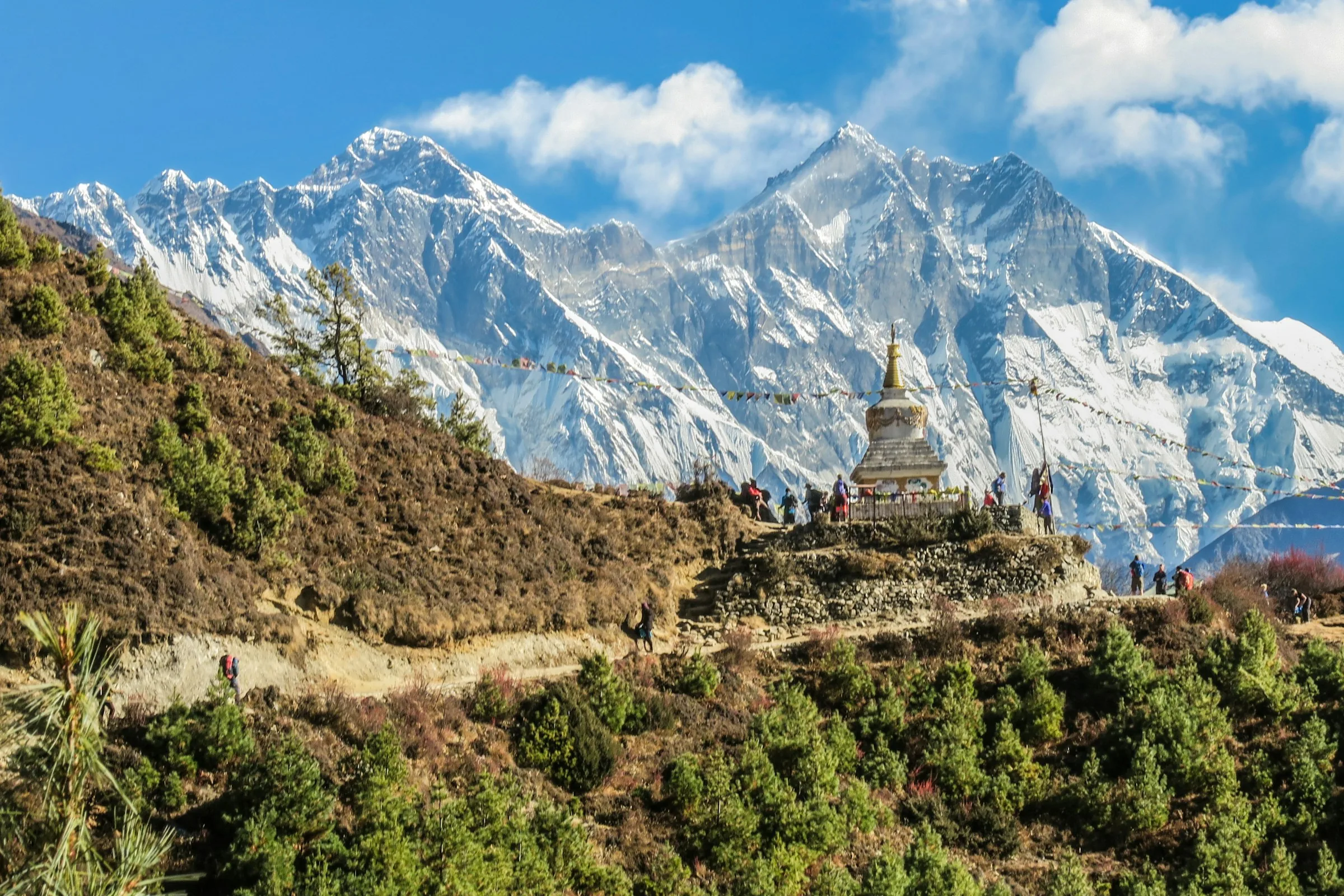
Tsum Valley is one of the more genuinely remote, culturally distinct treks in Nepal — Tibetan-influenced villages, monasteries, and a sacred-Buddhist hidden-valley pedigree that only opened to outsiders in 2008. It also has the most confused permit story on the ACAP-style trekking circuit. You need two permits at minimum, possibly three, only one of which you can buy yourself, and the others have to go through a registered trekking agency. Here is what each one is, what it costs, and how the process actually works.
The three permits at a glance
MCAP — Manaslu Conservation Area Permit
NPR 3,000- Issued by
- NTNC
- Buy solo?
- Yes
Standard conservation entry fee. Same flat rate, regardless of how long you stay. We sell this.
Tsum Valley RAP — Tsum Valley Restricted Area Permit
USD 30–40 + USD 7/day- Issued by
- Department of Immigration
- Buy solo?
- No — agency only
Restricted-area paperwork. Has to go through a registered trekking agency. We do not sell this.
Manaslu RAP — Manaslu Restricted Area Permit
USD 75–100 + USD 10–15/day- Issued by
- Department of Immigration
- Buy solo?
- No — agency only
Only required if you are doing the Manaslu Circuit alongside Tsum. Same agency-only rule.
What MCAP is, and why it isn't enough on its own
MCAP is the conservation permit — it lets you enter the Manaslu Conservation Area, the protected zone that surrounds the Manaslu massif and includes Tsum Valley as a sub-region. Same model as ACAP and GCAP. NPR 3,000 flat, regardless of how long you stay. Issued by NTNC (Nepal Trust for Nature Conservation), the same NGO that runs the conservation areas across the country.
MCAP on its own gets you into the conservation area. It does not get you into Tsum Valley specifically — Tsum is also a designated restricted area, which is a separate legal category with its own permit, its own issuer, and its own rules. You need MCAP and the Tsum Valley RAP to legally trek there.
What a RAP is, and why it works differently
RAP stands for Restricted Area Permit. It is issued by Nepal's Department of Immigration, not NTNC, and it exists for parts of the country that border China or that the government has designated as culturally or strategically sensitive: Upper Mustang, Tsum Valley, Manaslu, Dolpo, Nar Phu, Kanchenjunga, and a handful of others.
The rules attached to a RAP are the part most trekkers don't expect:
- It can only be applied for through a government-registered trekking agency. There is no walk-in or online process for individuals.
- You must trek with a licensed guide. The guide's name appears on the permit itself.
- There is a two-trekker minimum in the formal rules. In practice agencies sometimes pair solo trekkers with a "second" name on paper, but the published rule is two.
- Costs are per-person, per-day, with a higher rate in the busier autumn season.
This is the part of "do you need a guide for trekking in Nepal" where the answer genuinely is yes. Restricted areas are not Annapurna; they really do require a guide, and the rule is enforced at multiple checkposts on the way in.
The Tsum Valley RAP, by season
| Season | Initial window | Each day after |
|---|---|---|
| September–November | USD 40 for the first 8 days | USD 7 per additional day |
| December–August | USD 30 for the first 8 days | USD 7 per additional day |
A typical 10-day Tsum trek in October works out to roughly USD 54 per person in RAP fees, on top of the MCAP and any agency / guide costs.
The Manaslu RAP — only if you're combining the two
Most trekkers reach Tsum Valley as a side trip off the Manaslu Circuit, branching off at Lokpa and rejoining the main trail later. If your itinerary includes any of the Manaslu Circuit beyond Lokpa, you need the Manaslu RAP as well — same agency-only rule, higher fee, separate piece of paperwork.
| Season | Initial window | Each day after |
|---|---|---|
| September–November | USD 100 for the first 7 days | USD 15 per additional day |
| December–August | USD 75 for the first 7 days | USD 10 per additional day |
If you do both as a single 14–18-day trek (not unusual), the RAPs alone can run upwards of USD 200 per person, plus the MCAP, plus the agency package.
Why you can't buy the RAP yourself
This is a deliberate part of how Nepal manages restricted regions. The RAP isn't sold online; it isn't sold at the NTNC office; it isn't issued at the trailhead. The Department of Immigration in Kathmandu accepts RAP applications only from registered trekking agencies, with the trekker's passport details, dates, and licensed guide details all attached.
The reason the rule exists, charitably: cultural sites in Tsum and Manaslu are genuinely sensitive, the region was closed to outsiders until the late 2000s, and the combination of permit fees and agency oversight provides funding and accountability. The reason the rule exists, less charitably: it locks in a steady flow of business for registered trekking agencies. Both are true.
The realistic process, end to end
- Pick a registered trekking agency in Kathmandu. Reputable ones are easy to find via reviews; ask for an itemised quote that breaks out RAP fees, guide cost, food/lodge, transport, and agency margin.
- Send them passport details and dates. They handle the RAP application at the Department of Immigration; expect 2–3 business days for paperwork.
- Buy your MCAP separately if you don't want it bundled. We can do this for you online (NPR 3,000 + service fee) and you'll have the PDF before you fly.
- Meet your guide at the trailhead — usually you fly into Kathmandu, a jeep takes the team to the start of the Manaslu trek (Soti Khola or Machha Khola), and you go from there.
- Permits are checked at multiple points on the way in — Soti Khola, Jagat, Lokpa for the Tsum branch. Keep all three permits accessible.
What we sell, and what we don't
Bottom line
Tsum Valley is one of the trips where the popular "you don't need a guide" energy does not apply. You do, you need an agency to apply for the RAP on your behalf, and you need to budget for permit fees that comfortably exceed the cost of an Annapurna trek. None of that takes anything away from the trek itself — the valley is one of the most distinct cultural experiences left in Nepal — it just means going in with the right paperwork and the right expectations.
Permit fees and rules are set by the Department of Immigration and revised periodically — the figures above reflect the published structure as of 2026 and are always worth confirming with whichever agency you book through.
Get the conservation permit
MCAP, sorted in a few minutes
Apply for your Manaslu Conservation Area Permit. Delivered within 24 hours. Pair with the agency-issued RAPs for Tsum Valley and Manaslu.
Get my MCAP · $44.28